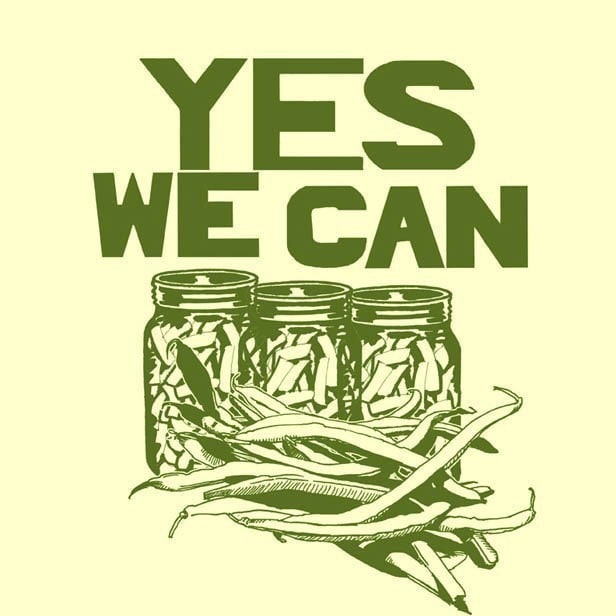
In other news, E and I joined the Bowness Railway Community Garden. We are looking forward to meeting other like-minded green thumbs. I was quite entertained to hear from the coordinator that the problem at community gardens in Bowness is not teenagers vandalizing, but senior citizens helping themselves to vegetables.
Sunday, June 13, 2010
Beet the System
In other news, E and I joined the Bowness Railway Community Garden. We are looking forward to meeting other like-minded green thumbs. I was quite entertained to hear from the coordinator that the problem at community gardens in Bowness is not teenagers vandalizing, but senior citizens helping themselves to vegetables.
Sunday, June 6, 2010
Gardening on a budget
We did build two planter boxes. In that case we spent the big bucks on cedar, because it is the longest lasting untreated wood (treated wood is out of course, no one wants arsenic salad..). I did want to treat it with something, but found that the natural deck oil available in town is $50 a can. So instead I followed a suggestion I saw at Mother Earth News, and bought some linseed oil and turpentine. Linseed is flax oil, and turpentine is derived from pine trees. A 50/50 mix is a great wood treatment and costs $35 a can.
Finally, it's time to plant! Next on the to do list, constructing some mini greenhouses to use as the plants get going.
Friday, June 4, 2010
Tempeh
It's all about comfort foods this week. Noodles and curry coconut sauce in this case.. I started with one of Bittman's braised tempeh recipes. Have you ever tried tempeh? I have come around to really liking it, although I was laughing with friends recently that I can't even tell what a normal person would consider good anymore, because my taste for food is so varied these days. I do drink fermented beet juice, after all (yes, yes, it sounds horrific.. but you don't even know how good it is). I think tempeh falls in to the same category for many people.I remember years ago buying tofu and putting it in stir fries, and then eating around it because the truth was, I didn't like it. But now that I have learned the tricks to cooking it up properly, it is a fantastic satisfying meal.
I had the same experience with tempeh. Tempeh is an Indonesian invention, traditionally made of whole soy beans formed into a cake and fermented. It is very high in B vitamins. Like all fermented bean foods, it has a full, earthy flavor, and can be a bit much for some palates. When I first tried it out I would use entire blocks of the stuff, grilled or whatever, and I just didn't like it. Bittman is a genius with these kinds of things though. In his discussion of tempeh, he explains that because it is so strong, it does well paired with really rich or sweet and sour tastes. Also, he suggests crumbling it into dishes instead of trying to eat a huge piece of the stuff. In this recipe, you crumble it into an oiled pan and fry it with garlic, ginger, and curry powder and then add even parts veggie stock and coconut milk and let the sauce boil down for 15 minutes or so. The original recipe calls for some chopped cabbage added near the end, but I had some kale on hand and it worked nicely.
Fortunately kale, like other substantial and slightly bitter greens, also mellow out beautifully with the addition of something rich (coconut milk) or sweet and sour (for example, try kale sauteed with some apple cider vinegar and maple syrup).
I served the dish with rice noodles. With help from Bittman, the tempeh was fantastic.
Friday, May 21, 2010
Millet
I've been looking for alternate grains to wheat, and millet has proven to be a great option. I especially appreciate that I can find local millet, as I read that it is best consumed within 6 months because it is technically a seed, not a grain and therefore contains volatile oils. It is high in B vitamins, and one cup of cooked millet provides 26% of daily magnesium requirements. In looking into millet, I found that it is a major subsistence crop in Africa, often ground into flour for injera, which is a crepe-like fermented bread. Injera is definitely on my to do list.. I have had the pleasure of home made injera in the past and it is really, really nice. In Ethiopia, the bread serves as a base for meals, and is used to scoop up the food in the same way naan is used for Indian dishes. Our friends told us that forks are associated with the colonialist oppressor! Injera is a powerful cultural symbol in Ethiopia, in the same way that rice is in Asia. (In South Korea, the friendly 'how are you' greeting is 'have you eaten rice today?')I cooked the millet and made cakes with a Mark Bittman recipe similar to this one, but also included a bit of flour and an egg as a binder.
Monday, May 17, 2010
Daikon
The Asian food kick continues. A trip to Superstore led to a fridge full of gai lan (what I would do for organic gai lan, sigh..) and many delicious meals. I also picked up some daikon, which became daikon kimchi and Dubu Mu Jorim (tofu and daikon in soy sauce). I hadn't had the tofu dish since I was living overseas and it was as good as I remember. Daikon is really nice cooked, it feels like comfort food. I don't think I've ever seen it in a cooked dish in Canada.Korean Tofu and Daikon
1/4 lb. white radish, cut in 1 inch x 1/2 inch pieces
1/2 cup dried sliced shitake mushrooms (easy to find and well priced at Asian grocery stores)
4 oz. firm tofu, cut in 1 inch x 1/2 inch pieces
1 cup water
2 T soy sauce
1 T honey
1 T. Korean red pepper paste (gochuchang).
Soak the mushrooms in boiling water. Place the radish and water in a pot, season with soy sauce, and simmer on low heat for 20 minutes. Add the drained mushrooms, red pepper paste, tofu and honey and simmer for 5 more minutes.
The spring tonic adventures continue as well. I went to a really interesting weekend workshop with Daniel Vitalis on wild nutrition, and he taught us how to make drinks and tinctures from wild plants. We also went out to the mountains to drink mineral water from the springs around Banff. I learned that the idea of water being 'sweet' comes from mineral water that's high in calcium. We also tried sulfurous water which can be used medicinally as it is acidic and stimulating. I didn't know until this weekend that the water coming up out of a spring is often 10,000 years old or older.
Subscribe to:
Posts (Atom)
This work is licensed under a Creative Commons Attribution-Noncommercial-No Derivative Works 3.0 Unported License.